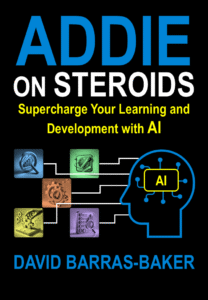
When I first encountered the ADDIE model, I didn’t fall in love with it. It wasn’t sexy. It wasn’t fast. It wasn’t even particularly modern. But it worked. And that alone was worth a closer look.
My fascination with learning design started long before digital transformation became a buzzword. In 1984, I attended the ADCIS Conference in Washington DC, an event that shaped my thinking forever. It was there I heard Donald Bitzer, one of the great pioneers of computer-based learning and co-creator of PLATO, speak about how people truly learn. His insights, simple yet profound, still resonate with me to this day.
For those unfamiliar, PLATO (Programmed Logic for Automated Teaching Operations) was a groundbreaking system developed by Control Data Corporation and the University of Illinois, long before the internet as we know it existed. It delivered networked, interactive learning at a time when most people were still using paper manuals and overhead projectors. PLATO proved something radical for its time: that technology, when thoughtfully applied, could fundamentally change how people acquire and retain knowledge.
That experience influenced how I approached learning throughout my career – from aviation training to corporate training, consulting, and digital design. And every time I experimented with new ideas, new technologies, or new delivery models, I kept coming back to ADDIE. Not as a religion, but as a framework.
A thinking scaffold. A way to bring order to chaos, strategy to action, and clarity to conversations that otherwise felt like noise.
ADDIE on Steroids was born out of equal parts frustration and respect. Frustration that too many learning professionals were still building “tick‑the‑box” training. Frustration that stakeholders often undervalued planning. And frustration that so many learning teams were still flying blind in an age of intelligent tools and data-rich insights.
This book is the upgrade I wish I had when I started. It’s for instructional designers who are tired of reinventing the wheel. For L&D leaders who want their teams to think and act like performance consultants.
For professionals who understand that AI won’t replace us, but it will replace the ones who don’t adapt.
What you’ll find in these pages is not just a model, but a method. Not just theory, but traps, techniques, examples, and AI considerations drawn from decades of hands-on experience and constant exploration.
And one final note: I didn’t write this for applause. I wrote it because I care deeply about learning that works.
I hope it helps you create more of it.
David Barras‑Baker
Perth, Australia
2025